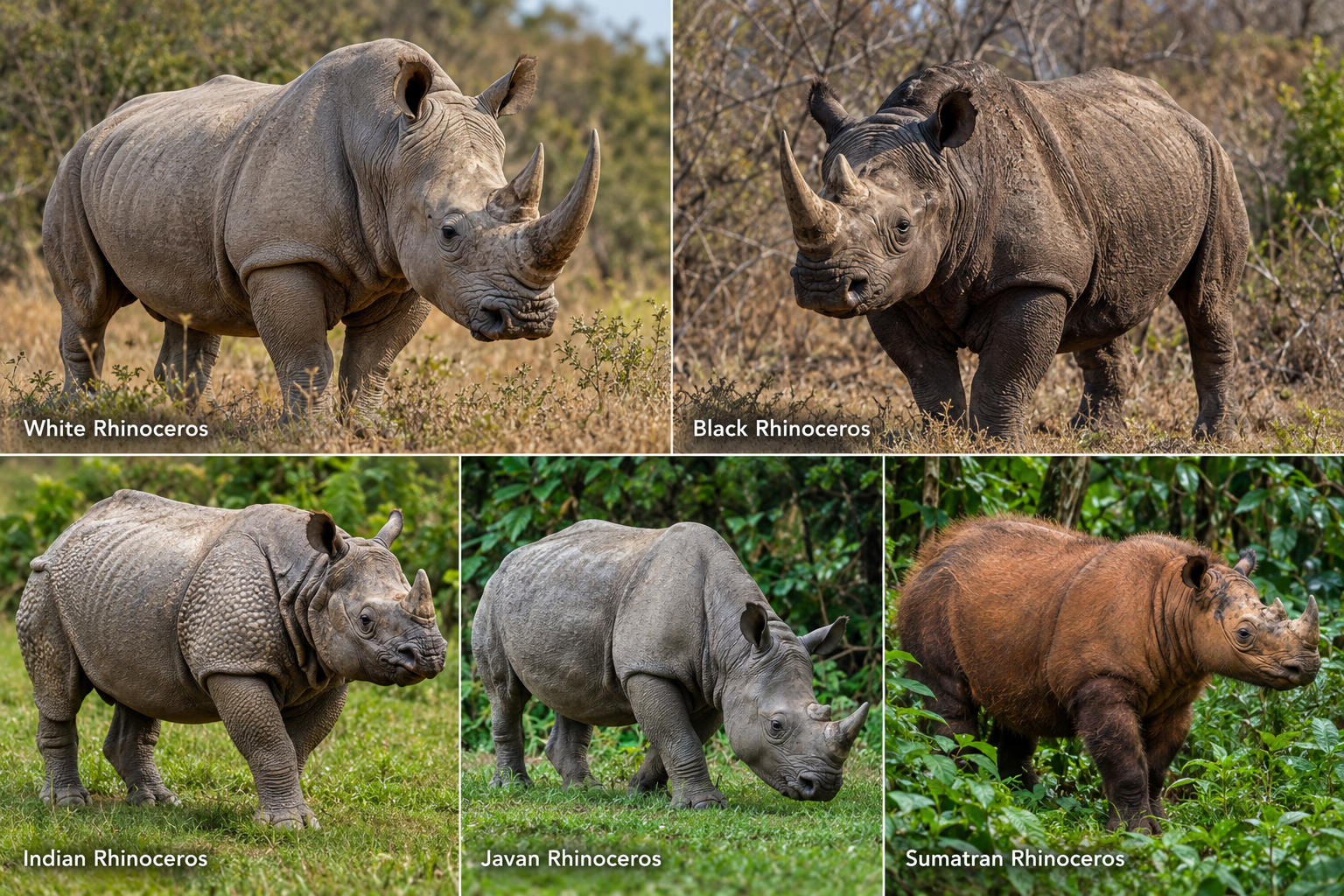
The Five Rhino Species: Nature's Living Giants
Rhinos have roamed the Earth for millions of years, surviving changing climates and natural predators. Today, however, they face their greatest challenge: human activity. Only five species remain, each with its own remarkable characteristics, habitat and conservation story. While some populations are recovering, others are hanging on by only a handful of individuals.
White Rhinoceros (Ceratotherium simum)
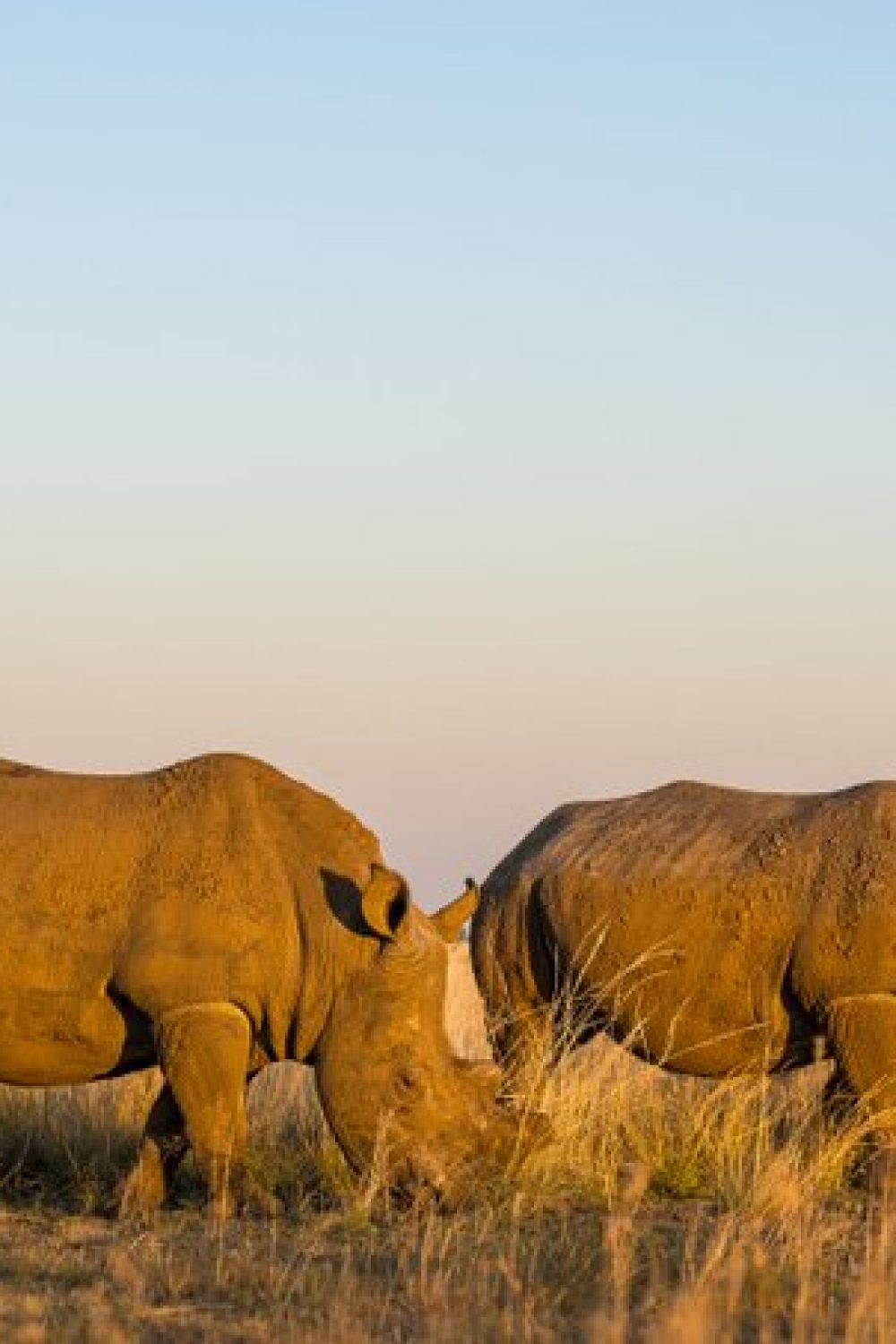
The White Rhinoceros is the largest of all rhino species and the third-largest land mammal after the African and Asian elephants. Adults typically weigh between 1,800 and 2,500 kilograms, with exceptional males exceeding 3,600 kilograms.
Its broad, square-shaped mouth is perfectly adapted for grazing on grasses across the African savannah. Although the Southern White Rhino has recovered to more than 17,000 individuals thanks to decades of conservation, the Northern White Rhino is functionally extinct, with only two females remaining.
Indian Rhinoceros (Rhinoceros unicornis)
The Indian Rhinoceros is the second-largest rhino species, weighing between 1,800 and 2,700 kilograms. It is instantly recognisable by its single horn and thick folds of skin that resemble natural armour.
Once reduced to fewer than 200 animals, careful protection and habitat management in India and Nepal have helped the population recover to more than 4,000 individuals, making it one of the world's greatest conservation success stories.
Black Rhinoceros (Diceros bicornis)
Smaller than its white cousin, the Black Rhinoceros weighs between 800 and 1,400 kilograms. Instead of grazing, it feeds on shrubs and bushes using its distinctive hooked upper lip, which is specially adapted for browsing.
Despite encouraging population growth in recent years, the Black Rhino remains Critically Endangered, with poaching continuing to threaten its survival across Africa.
Javan Rhinoceros (Rhinoceros sondaicus)
The Javan Rhinoceros is one of the rarest large mammals on Earth. Adults weigh between 900 and 2,300 kilograms, and today the entire wild population survives in a single protected area—Ujung Kulon National Park in Indonesia.
With only around 76 to 80 individuals remaining, the species is extremely vulnerable. A major disease outbreak or natural disaster could have devastating consequences for its future.
Sumatran Rhinoceros (Dicerorhinus sumatrensis)
The Sumatran Rhinoceros is the smallest surviving rhino species, weighing between 500 and 800 kilograms. It is also the oldest living rhino lineage and the only species covered with reddish-brown hair.
Fewer than 30 to 50 individuals are believed to remain in isolated forests across Indonesia, making it the world's most endangered rhinoceros. Habitat loss and fragmented populations have made natural breeding increasingly difficult.
Why Are White and Black Rhinos Both Grey?
Despite their names, neither the White Rhino nor the Black Rhino is actually white or black—both are grey.
The name "White Rhino" is widely believed to have originated from the Dutch word "wijd," meaning "wide," describing the animal's broad grazing mouth. Over time, English settlers interpreted the word as "white," and the browsing species became known as the Black Rhinoceros simply to distinguish between the two.
Protecting the Future
Rhinos are more than iconic wildlife; they are essential to the ecosystems they inhabit. By shaping vegetation, dispersing seeds and maintaining healthy landscapes, they support countless other species. Every rhino saved represents a victory for conservation, proving that with strong protection, community involvement and responsible tourism, even species pushed to the brink of extinction can still have a future.
Witnessing these magnificent creatures in their natural habitat is an unforgettable privilege. At Gorille Africain Tours, we design journeys that actively support conservation in destinations like Akagera National Park in Rwanda and premier reserves across East and Southern Africa. Contact our safari specialists today to plan your adventure.
Tags
Ready for your own adventure?
Let our experts craft a tailor-made luxury safari perfectly suited to your desires.
Plan Your Journey